

Key Highlights:
- Most economic class Express Entry refusals carry no right of appeal, judicial review at the Federal Court is one of the few real options available
- This is a real example of a successful judicial review we handled with counsel we work with, resulting in a settlement that set aside the original refusal
- A successful judicial review does not mean automatic approval, it means a second, often more scrutinized, chance at the same decision
- Judicial review isn’t the right move for every refusal, it depends entirely on whether the issue was IRCC’s error or a genuine gap in the application
(Handled by SAAB Immigration Services Inc. Judicial review led by Dr. Pallavi Kataria, Barrister and Solicitor; immigration submissions led by Dikshit Soni, RCIC)
Judicial review is one of the few real options available when an Express Entry application is refused, since most economic class refusals don’t carry a right of appeal. This is a real example of a successful judicial review we handled with counsel we work with, from refusal to a Federal Court settlement, and what happened next.
What happened in this case?
The Applicant had a strong Express Entry profile: a foreign-trained health professional with a completed Canadian postgraduate credential, invited under the Federal Skilled Worker Program in the Healthcare and Social Services category, with a CRS score above that round’s cutoff.
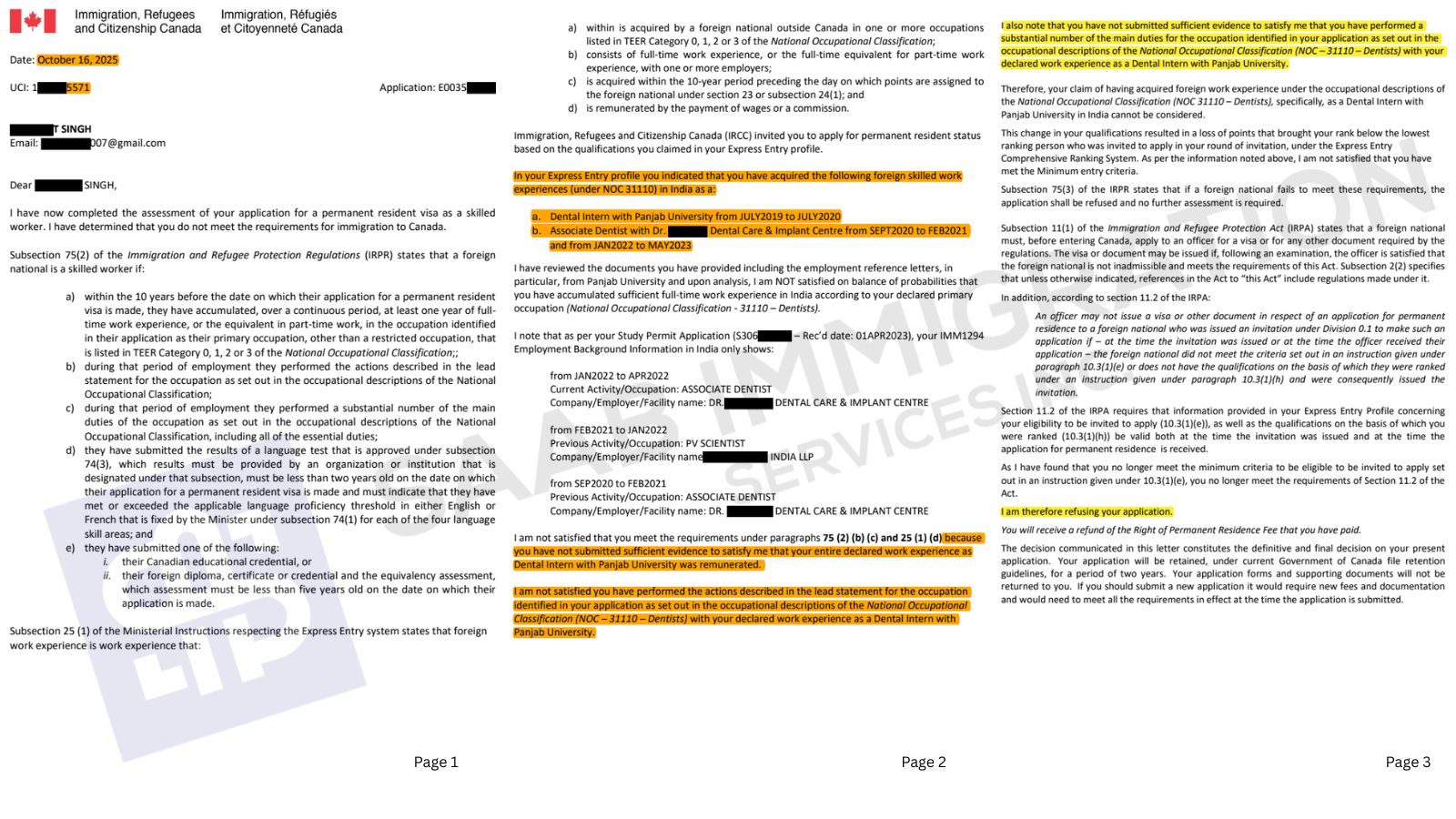
The application was refused. The refusing officer wasn’t satisfied that a period of foreign work experience, a paid internship completed during the Applicant’s professional training, was genuinely remunerated, or that the actual duties performed matched the National Occupational Classification requirements for the claimed occupation. The officer also pointed to a discrepancy between an old study permit application, filed years earlier by an overseas education consultancy with no involvement from any licensed Canadian representative, and the work history declared in the PR application. Once that internship experience was disregarded, the Applicant’s ranking fell below the cutoff for the round under which they’d been invited, triggering an automatic refusal under Section 11.2 of the Immigration and Refugee Protection Act.
What did we have to prove?
This wasn’t a documentation gap a stronger reapplication could simply fix. The refusal turned on how the officer weighed evidence already on file, and on an old discrepancy that had an innocent, explainable cause the officer never engaged with. That combination made this a genuine judicial review candidate rather than a reapplication case: the goal was to challenge the refusal itself at the Federal Court, not resubmit a new file.
How we built the judicial review application
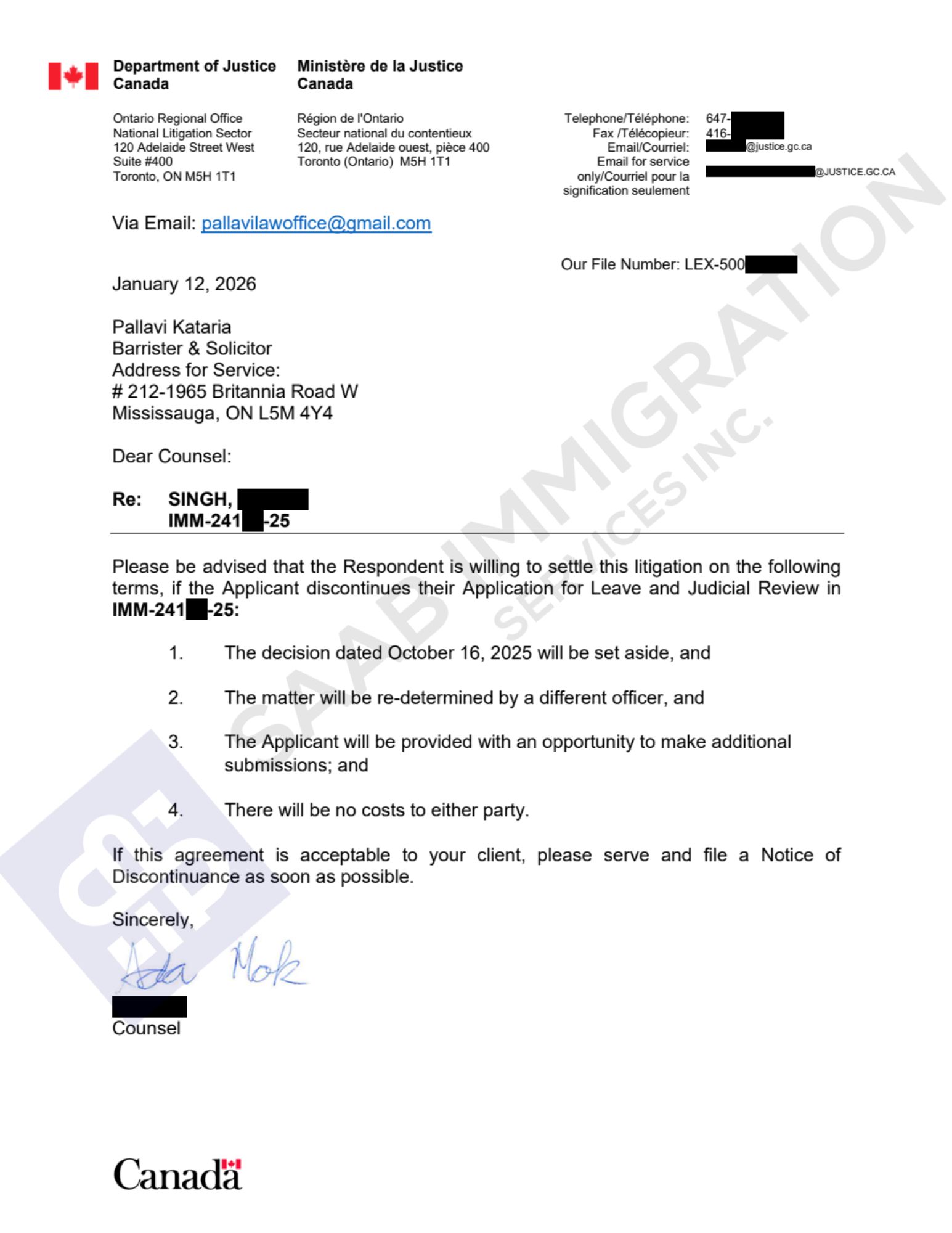
Dr. Pallavi Kataria, Barrister and Solicitor, Dr. Pallavi Kataria of Pallavi Law Office, filed an Application for Leave and Judicial Review at the Federal Court on the Applicant’s behalf. Before the matter reached a hearing, the Department of Justice offered to settle: the original refusal would be set aside, the file redetermined by a different officer, and the Applicant given a genuine opportunity to make further submissions, with no costs to either party.
Once the file was reopened, Dikshit Soni, RCIC, prepared a complete, evidence-based response addressing both original concerns directly: an explanation of the study permit discrepancy grounded in the recognized innocent misrepresentation principle in Canadian immigration law, and documentary evidence corroborating the internship, including bank records and institutional confirmation of the internship stipend and duties performed.
What the Federal Court decided
The settlement itself may be a meaningful outcome on its own. A government settlement offer of this kind can suggest there may have been real doubts about whether the original decision would have survived scrutiny in court, though this will vary by case.
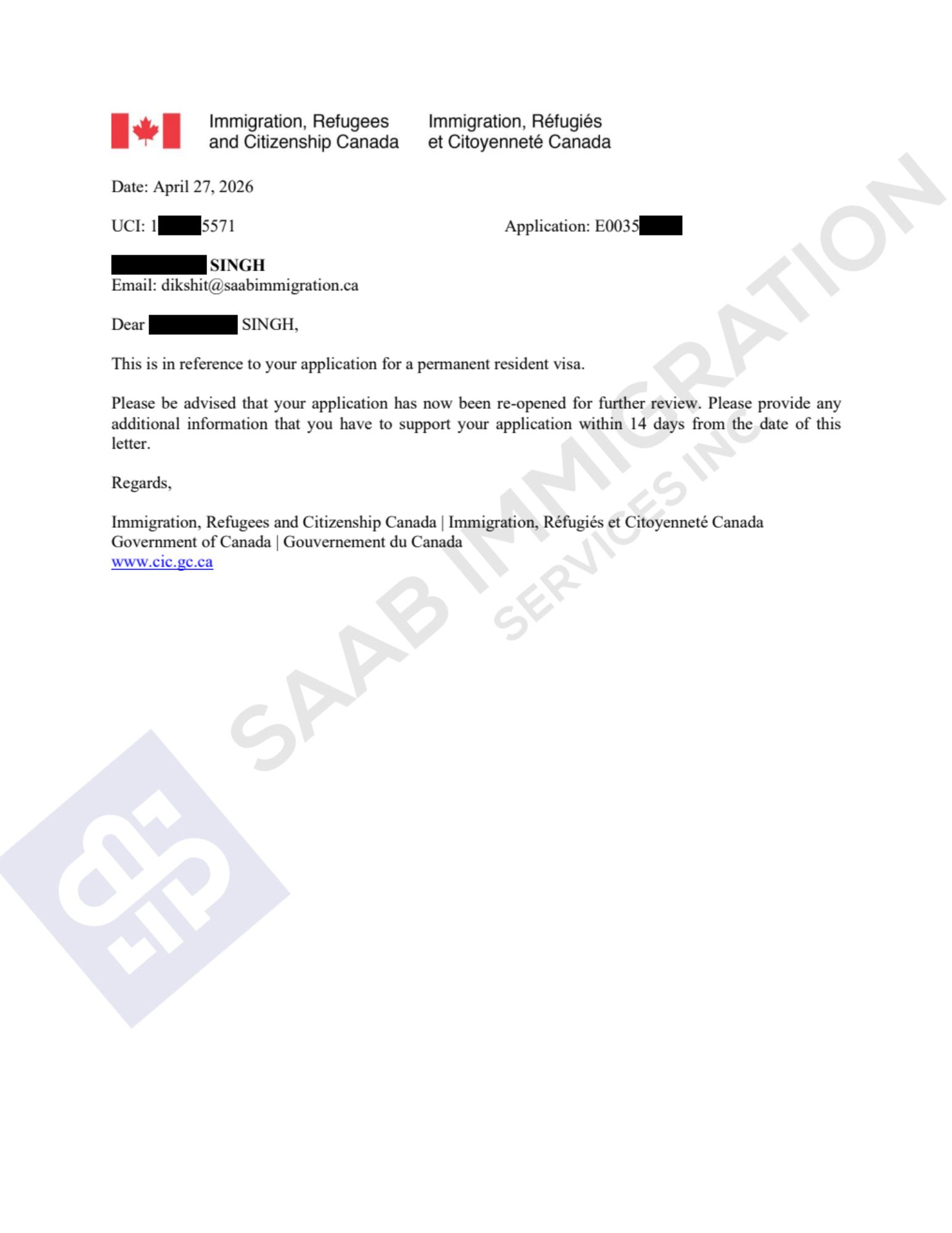
What followed is worth understanding clearly, since it corrects a common misconception: a successful judicial review does not hand you an approval. It hands you a second, fairer opportunity at the same level of scrutiny, sometimes more. The new officer requested additional documentation, including material that had, in fact, already been submitted twice previously and was even directly quoted in the original refusal letter. That document was resubmitted a third time with the relevant context clearly explained. IRCC has continued to request further information since, most recently an updated IMM 5669 form, as the redetermination proceeds. The file remains open as this case study is published.
What This Case Shows
A refusal built on how evidence was weighed, not simply on missing documents, can be a genuine judicial review candidate. Having a lawyer and an RCIC working the same file, rather than being handed between two separate offices, matters directly in this kind of case: the same team that understood exactly why the original refusal was flawed carried that understanding straight into the redetermination submissions.
Judicial Review May Not Always Be the Right Move
This case shows judicial review working well in one set of circumstances, but it may not be the right answer to every Express Entry refusal, and treating it as a default option could be a mistake. This is generally a case-by-case decision.
If you believe your application was prepared properly, the evidence was solid, and the refusal may have come down to an officer’s error, an unreasonable conclusion, a procedural fairness concern, or a discrepancy that has an innocent, documented explanation the officer may not have engaged with, judicial review could be worth exploring.
On the other hand, if there appears to be a genuine gap in your application, missing documentation, or a real mismatch between your experience and the NOC claimed, a stronger reapplication may be the more appropriate route. Judicial review does not reassess your case on the merits, it only considers whether IRCC’s process and decision were legally sound, so pursuing it where the underlying application has real gaps may not be the most effective use of your time and resources.
Every file is different, and this is exactly the kind of decision that benefits from speaking with a licensed immigration consultant or lawyer before deciding which path to take. A proper read of your GCMS notes and refusal letter is usually the right starting point.
If your Express Entry, work permit, or PR application was refused and you’re unsure whether this may be an IRCC error or a genuine gap in your file, that’s worth discussing with a professional before assuming reapplying is your only option. Learn more about Dr. Pallavi Kataria, or read more about your options on our refusals and appeals page and our previous blog post on Express Entry Refusals.
📅 Book a Consultation or call +1 (877) 683‑7222 (SAAB) or email us at hello@saabimmigration.ca.
A refusal is a starting point, not a verdict
Common questions
Can I appeal an Express Entry refusal?
Most economic class Express Entry refusals carry no right of appeal. Judicial review at the Federal Court is one of the few real options available. It does not reassess your case on the merits. It only considers whether the process and decision were legally sound, so the alternative in many files is a stronger reapplication.
Does winning a judicial review mean my PR application will be approved?
No. A successful judicial review does not hand you an approval. It gives a second, often more scrutinised, look at the same decision. In the case described here the refusal was set aside and the file went to a different officer, who then requested further documents. That redetermination was still open when this case study was published.
What happens if the Department of Justice offers to settle before the hearing?
In this file the offer came before the matter reached a hearing. The terms were that the original refusal would be set aside, the file redetermined by a different officer, and the applicant given a genuine opportunity to make further submissions, with no costs to either party. Terms and outcomes vary from case to case.
My refusal mentions a discrepancy from an old study permit application filed by an agent. Can that be explained?
It can be addressed. In this file the discrepancy came from a study permit application filed years earlier by an overseas education consultancy, with no licensed Canadian representative involved. The response was grounded in the recognised innocent misrepresentation principle in Canadian immigration law and supported with documents. Whether that argument fits your file depends on your own facts.
Should I file for judicial review or just reapply?
It depends on why you were refused. If the application was prepared properly and the refusal appears to rest on an officer error, an unreasonable conclusion, a procedural fairness concern, or a discrepancy with an innocent documented explanation, judicial review may be worth exploring. If there is a real gap or a mismatch with the NOC claimed, a stronger reapplication may be the better route.
For a detailed look at the arguments available after a PGWP refusal, see CBSA at the Calgary Student Protest: What Happened, and What the Law Actually Says.
